
Five benefits of getting a diagnosis for dementia – what are they?
Explainer
Alzheimer's Research UK
|
On 19 June 2026


One in three people living with dementia don’t have a diagnosis – leaving them without access to vital treatments, resources and support.
Yet for many, taking that first step towards a diagnosis can feel overwhelming. It can understandably feel scary to acknowledge the difficulties that dementia can cause. Others may experience long waits for a diagnosis.
But getting an accurate diagnosis early is crucial. This is because the diseases that cause dementia can have different symptoms which require specific treatments and management.
An early diagnosis also enables people to plan ahead, stay connected to their loved ones for longer, and consider taking part in dementia research.
Here are five benefits of getting a diagnosis for dementia from people with lived experience of dementia.
Five benefits of getting a diagnosis for dementia
The power of knowing – Steve and Aly

Steve, who is living with posterior cortical atrophy, and his wife Aly.
Steve: “I am living with posterior cortical atrophy (PCA) – a rare form of dementia which usually begins by affecting a person’s vision. I visited my GP and was referred to a neurologist who told me exactly what my diagnosis was.
“Receiving the diagnosis – finally knowing what was wrong – was incredibly helpful for my wife Aly and me. It meant we have the power of knowledge. We could understand what was happening and why.
“Getting information about what I was experiencing helped to minimise my anxiety. And it removed the need for unnecessary tests for other conditions.
“I felt very lucky to get a clear diagnosis within a year. It was a quick response, and we know that lots of people don’t get that, unfortunately. That must change – everyone living with the condition deserves the benefits of getting a diagnosis for dementia.”
Access to treatments – David and Christine
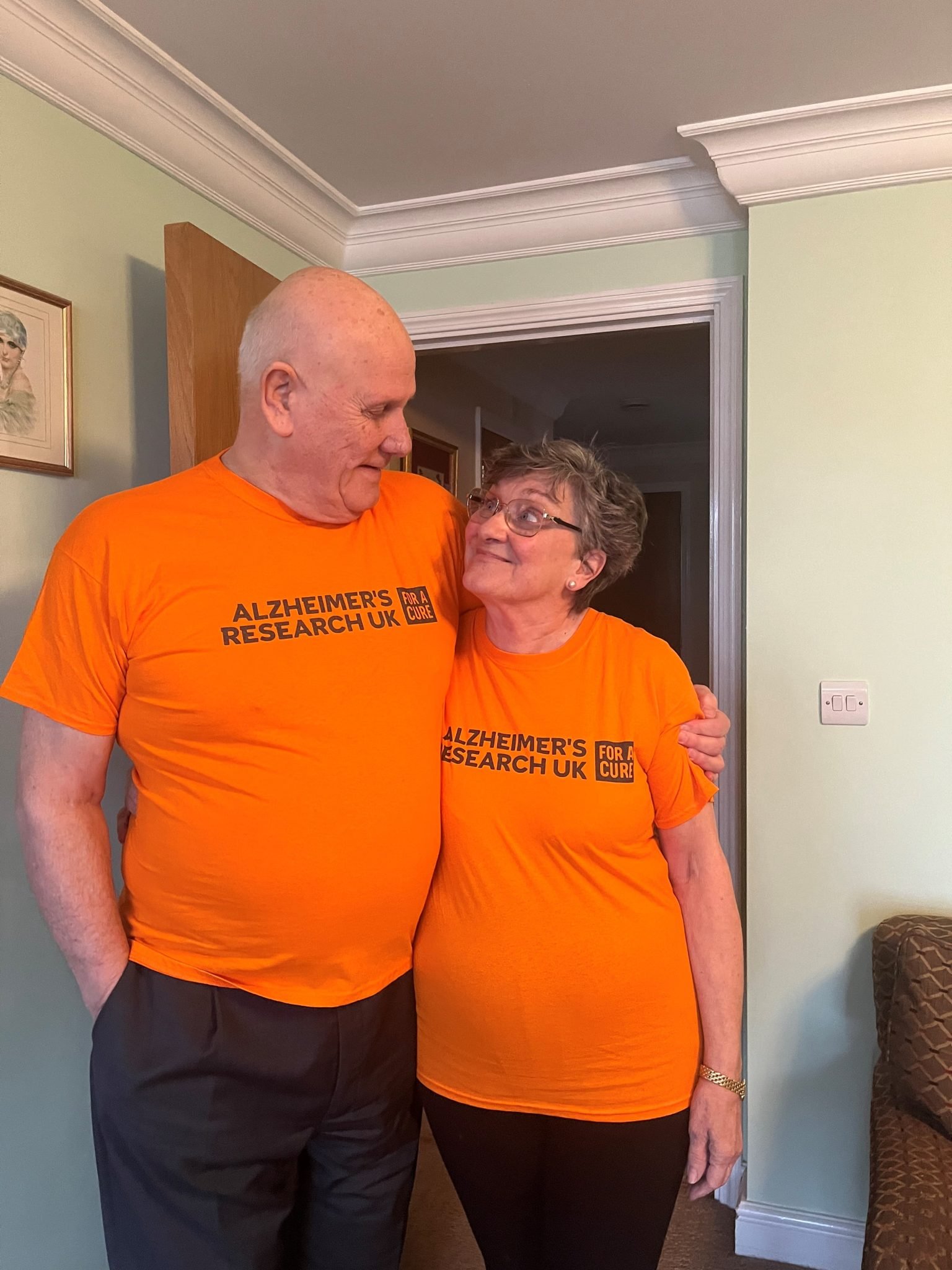
David, who went on the donanemab trial for Alzheimer’s, hugging his wife Christine.
David: “After a family Christmas, my sons persuaded me to see the GP. I didn’t want to believe anything was wrong, but I was referred to a memory clinic and then a consultant neurologist.
“Getting a quick diagnosis was helpful. Afterwards, I heard about a drug trial from a family friend. I had a few tests and was promptly put on the donanemab clinical trial.
“We just thought, why not? I had nothing to lose. The diagnosis was a shock, but we were happy to do something positive about it. The benefits of getting a diagnosis for dementia, like having access to medication, were certainly better than being stuck in uncertainty.
“An early diagnosis gave us this chance to plan our future as well as bring us all closer. It was a very positive experience. We can now enjoy future Christmases together.”
A chance to plan ahead – Samantha and Edward

Samantha and Edward celebrating Edward’s son’s wedding.
Samantha: “My husband Edward is living with PCA.
“Getting Edward’s dementia diagnosis was pivotal for us because we were able to have important conversations early on. We made adjustments along the way so his support could be tailored to his changing needs.
“The early diagnosis also meant we could put Lasting Power of Attorney agreements in place to ensure I could manage Edward’s finances, health matters and affairs as smoothly as possible.
“We spoke about how we would manage things as Edward’s symptoms progress too, which has helped me hugely both practically and emotionally. It feels comforting to know I’m able to respect his wishes.”
Better communication, compassion and awareness – Eleanor and Mike

Eleanor visiting her beloved dad, Mike, who was diagnosed with Alzheimer’s.
Eleanor: “It took ten years for my dad Mike to get an Alzheimer’s diagnosis. That meant ten years of confusion and uncertainty for our family – he was living with early onset dementia while we didn’t have a name for it.
“One of the benefits of getting a diagnosis for dementia was that it helped us as a family because we could talk about things in a way that we hadn’t been able to before.
“Having a shared understanding of his condition was important. We all read a book on dementia, which increased our awareness about his condition and helped me process my emotions. I learned to stop drawing attention to when he’d forget things as I understood it wasn’t helpful. This knowledge enabled me to support him more compassionately.
“Getting a diagnosis for his condition meant that Dad was able to access medication and support that he wouldn’t have benefitted from without one.”
Taking part in dementia research for a cure – Larry

Larry at a lecanemab infusion appointment.
Larry: “After my diagnosis, I was encouraged to take part in research by my son, Christopher.
“He works in biomedical research and for around 10 years he worked in HIV research, which has seen huge breakthroughs in new treatments. So, I know similar breakthroughs are possible for dementia.
“Getting an early diagnosis meant I could take part in a clinical trial for the Alzheimer’s drug lecanemab, which I believe has helped slow the progression of my symptoms.
“I feel fortunate that my diagnosis came so early and got me on this journey at a time when I could be helped.
“Contributing to studies and trials is a gift you’re giving to dementia research, to other people, to your children, and to yourself.
“The sooner we get to a cure the better. The more studies that are run, the more people who partake, the faster we will get there.”
Hope for the future of diagnosis – how you can help
The good news is that researchers and scientists are developing new and more accurate ways of diagnosing diseases like Alzheimer’s.
But many people don’t know the benefits of getting a diagnosis for dementia. And too many people are waiting too long for a dementia diagnosis.
To stay informed and hep drive change, sign up to Alzheimer’s Research UK’s monthly Enews and receive the latest updates on our work.
About the author

Alzheimer's Research UK
I need help to persuade someone to accept going to their GP for a Diagnosis please
Hi Vivien, thanks for your comment. This is a challenge many people face when they notice memory and thinking problems in others. Some people may not want to see their GP or may not realise they are experiencing memory and thinking problems. This can make it difficult to encourage them to get a diagnosis. You can visit this page for some helpful tips: https://www.alzheimersresearchuk.org/dementia-information/getting-a-dementia-diagnosis/#reluctant-to-see-GP
Thank you for the above I have just got my partner, kevi. A brain scan today.
When we get the result I hope he will be able to join in research.
Hi Lesley, thank you for your comment.
We hope everything went well with Kevin’s brain scan and wish you both the very best as you await the results. It’s wonderful to hear that you are interested in contributing to research. Research is vital to helping us make progress towards better treatments and, ultimately, a cure for dementia. When you’re ready, you can find out how to take part in research here: https://www.alzheimersresearchuk.org/research/getting-involved-in-research/